What 20 years of designing news brands taught me about identity, trust, and building for the digital age.
There has never been more news. And there has never been less clarity about who to trust.
The proliferation of digital platforms and self-published news pages has made the media landscape more crowded and more contested than at any point in history. Anyone can now create a news channel, build an audience, and present themselves as a credible source. In that environment, a strong brand identity is no longer just a design decision. It is an editorial statement, signalling professionalism, integrity, and accountability before a single headline is read.
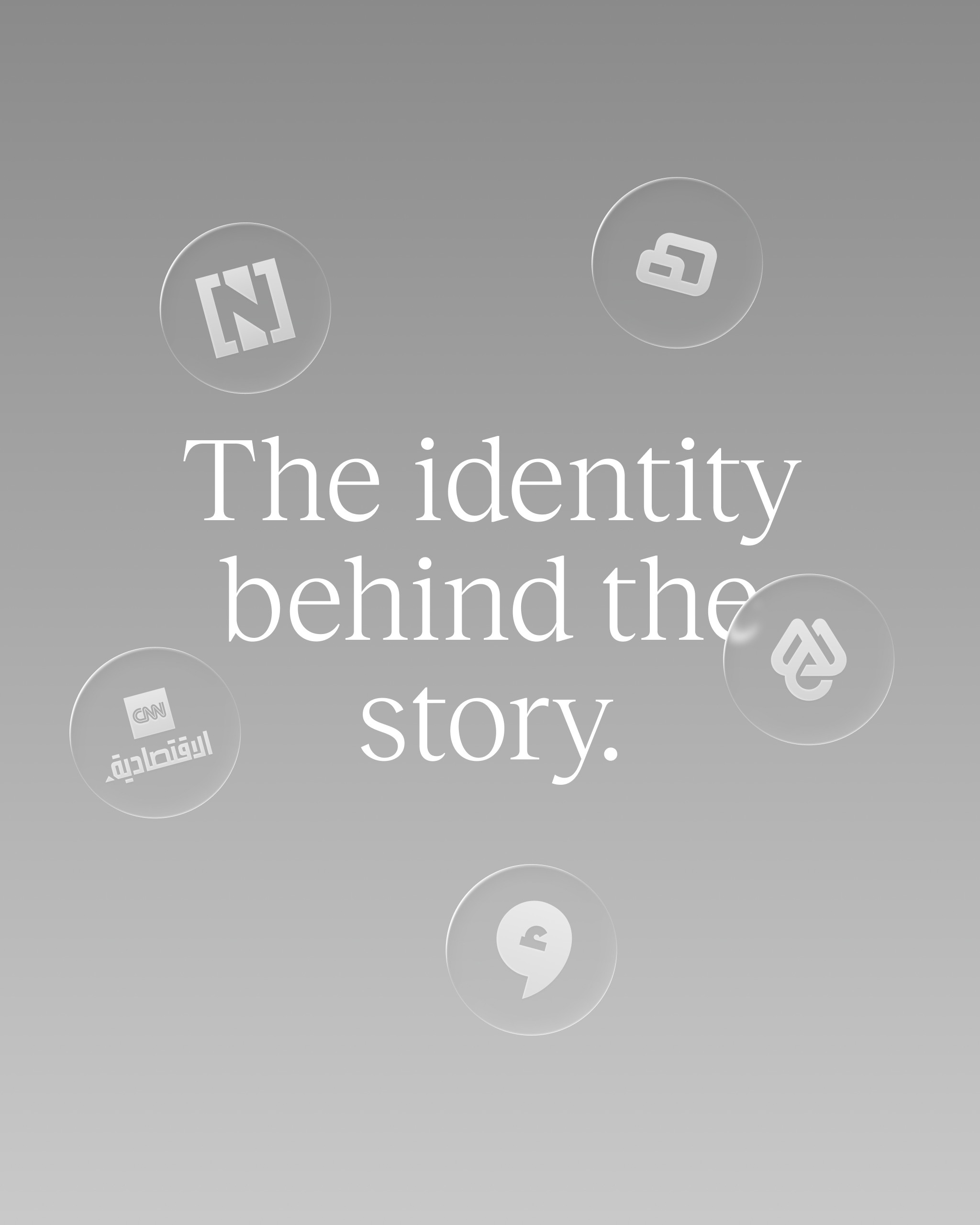
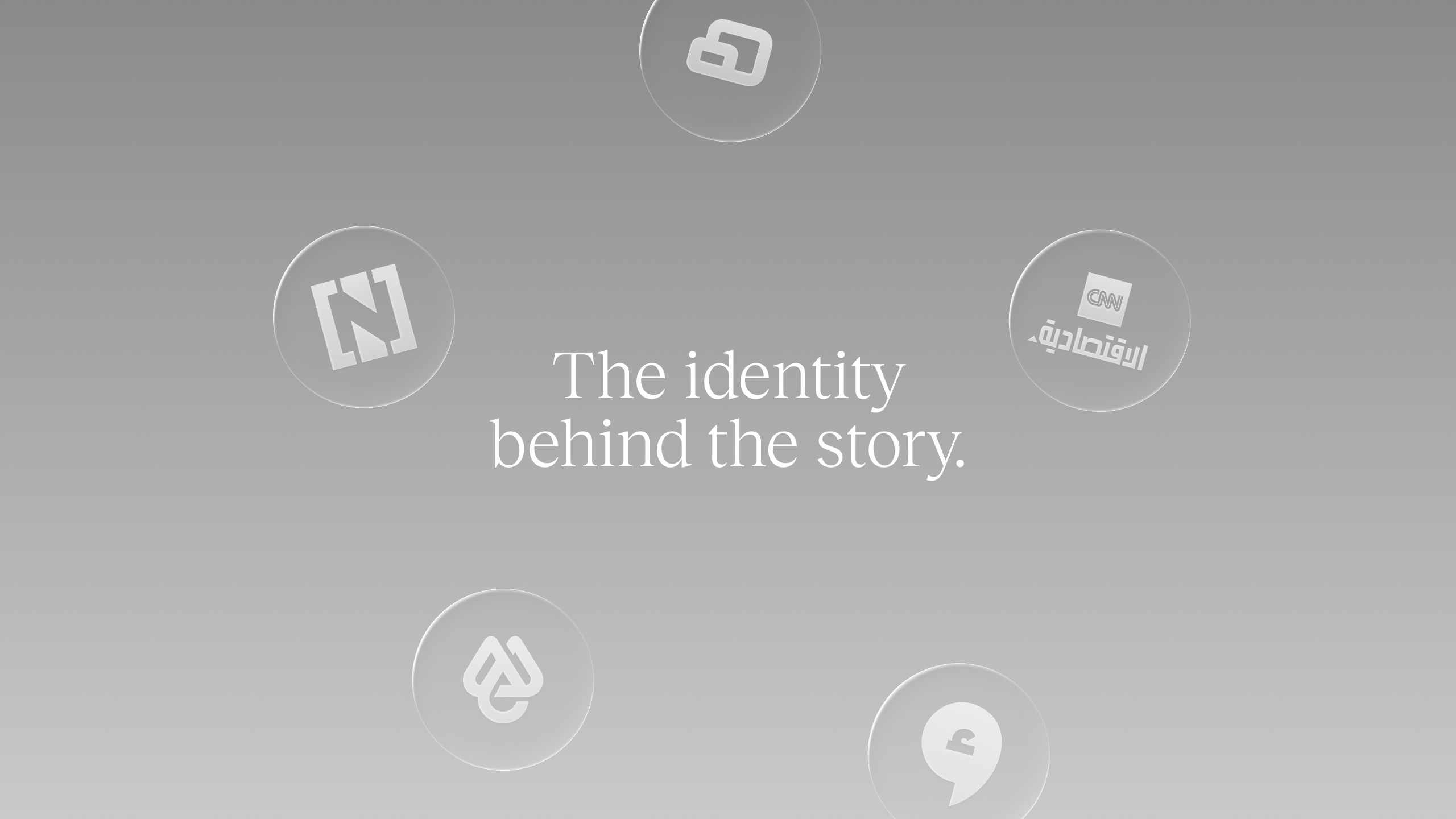
Over the past 20 years, I have worked on some of the region's most significant media brands, from The National and Hespress to Al Mashhad and CNN Business Arabic. Each brief was different. But the underlying question was always the same: how do you build an identity strong enough to hold across every context, every format, and every screen, without losing what made the brand trusted in the first place?
Here is what I have learned.
1. A mark that works at every scale
A media brand today lives everywhere, from a 70-inch broadcast screen to a 16-pixel favicon in a browser tab. The icon at the heart of the identity needs to be strong enough to hold at the smallest size and distinctive enough to be instantly recognisable without the wordmark. For Al Mashhad, this meant building the entire identity around a bespoke 'Ha' letterform that works as a standalone app icon, a broadcast watermark, and a social avatar simultaneously. For The National, the bracketed 'N' achieves the same. Immediately ownable at any scale.
2. A considered brand architecture
Not all news organisations are a single brand. Many operate across multiple sections, each with its own audience and editorial personality. The decision of whether those sections sit under one unified identity or carry their own visual language is one of the most consequential a media brand can make. The National's colour-coded section system is one of the clearest examples of this done well. A single, strong parent identity that flexes intelligently across every vertical without losing coherence.
3. Typography that serves the story
In news, the typeface is the voice. The font choice is not a cosmetic decision, it is a functional one. It must be legible across every screen size, at every weight, in every context from a breaking news alert to a long-form feature. Does the brand license an existing typeface or commission a custom one? How does it perform at small sizes on mobile? How does it hold on a broadcast lower third? For Arabic-language media brands, the challenge is compounded by the relative scarcity of high-quality Arabic typefaces and the complexity of right-to-left typesetting across digital platforms. These are questions that require testing, not assumptions.
4. Designing for motion from the start
Regional media brands live primarily on screens. That means the identity needs to work in motion as much as in static form. A logo that holds beautifully in print may not animate well on a broadcast open, a social story, or a digital billboard. Motion-readiness needs to be built into the identity from the beginning, not retrofitted at the end. For broadcast-first brands like Al Mashhad, this consideration shaped every design decision from the logomark outward.
5. Trust is the brief
Above all else, a news brand's identity must communicate trustworthiness. In a landscape where credibility is both the most valuable and the most fragile asset a publication can hold, every visual decision carries weight. The colour palette, the typeface, the structure of the logo, the consistency of the system. All of it contributes to a single impression in the reader's mind: is this a brand I can trust? That question is never asked consciously. But it is always answered. Getting it right is not just a design challenge. It is a responsibility.
The brands that will endure are the ones that understood early that identity is not a cosmetic layer applied over journalism. It is the visual articulation of everything they stand for, and it needs to be unmistakable, wherever it appears.
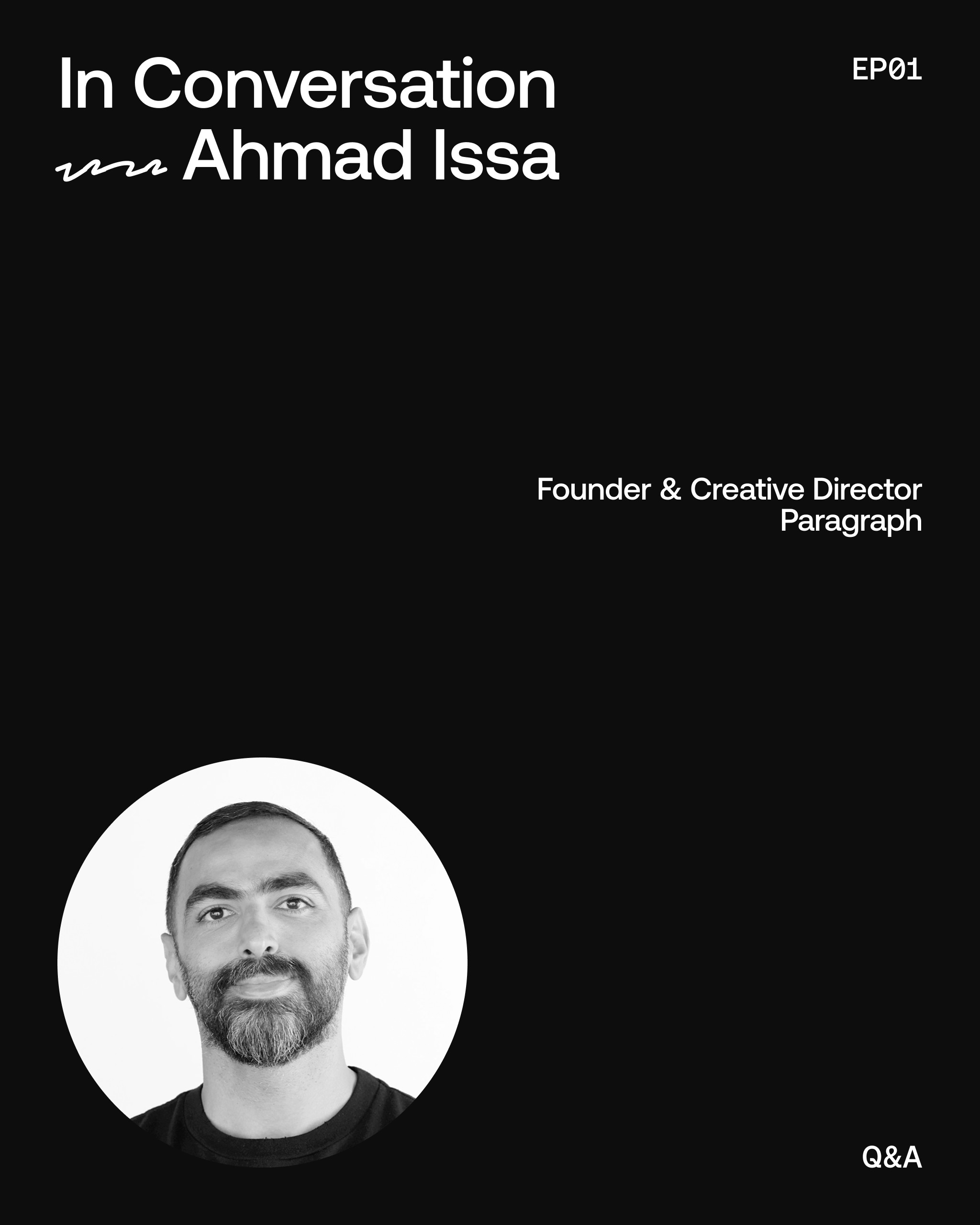
Ahmad Issa is the Founder and Creative Director of Paragraph, a brand and design studio based in Dubai.